Campus Reimagined Live! 2026 Day 2 round‑up | Designing a joyful and connected campus

Campus Reimagined Live! 2026 ended on a high, with day two sparking fresh thinking about how design and collaboration can shape a more joyful and connected University.
Students and staff explored how our physical environment can support staff and students’ sense of belonging, and how campus can strengthen its ties with the wider Leeds community.
Carrying the conversation forward
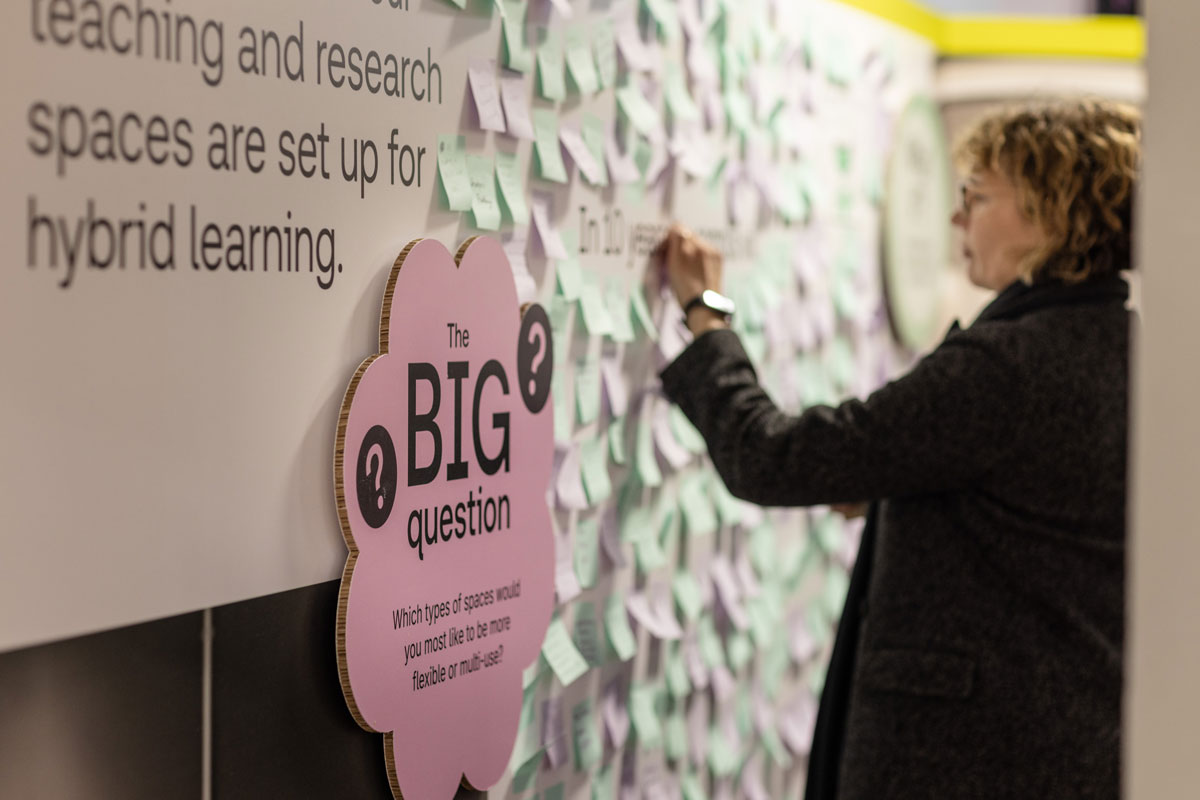
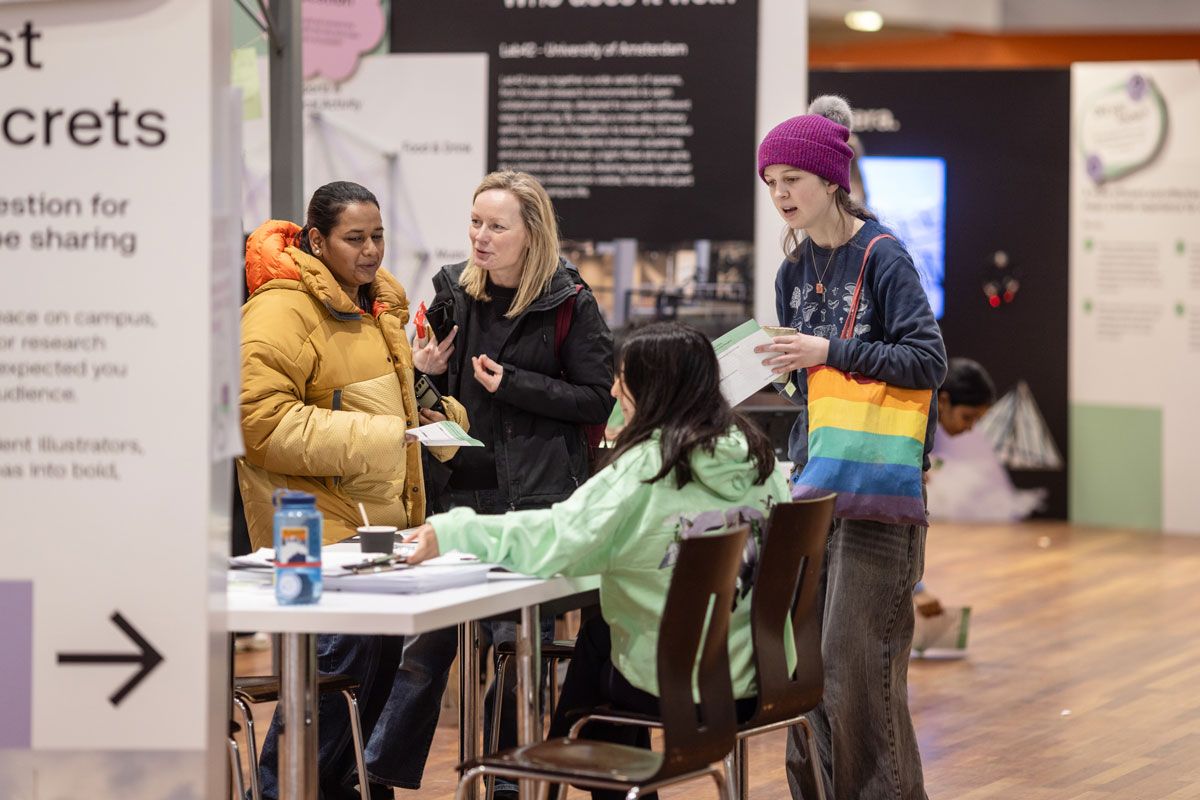
The energy around Campus Reimagined continued to build, with the interactive exhibitions creating space for thoughtful conversations about our campus across the four themes: Space, Future, Joy and Community.
The exhibition also included exciting updates on the six mini projects, which were voted for by staff and students at last year’s event.
As more staff and students dropped into the event, fresh perspectives emerged to help shape the campus of tomorrow.
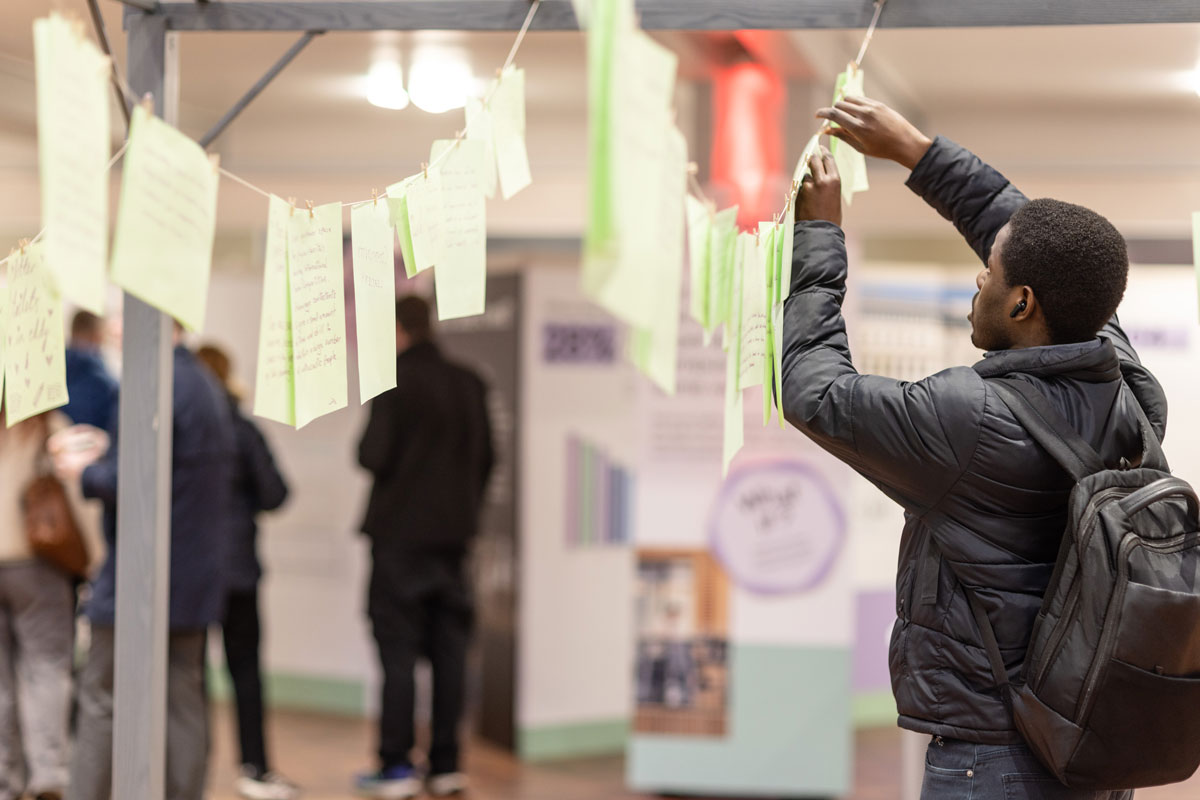
Captured through creative sketches, visual minuting and post-it notes, visitors responded to one another’s ideas and developed them further.
‘The architecture of joy’
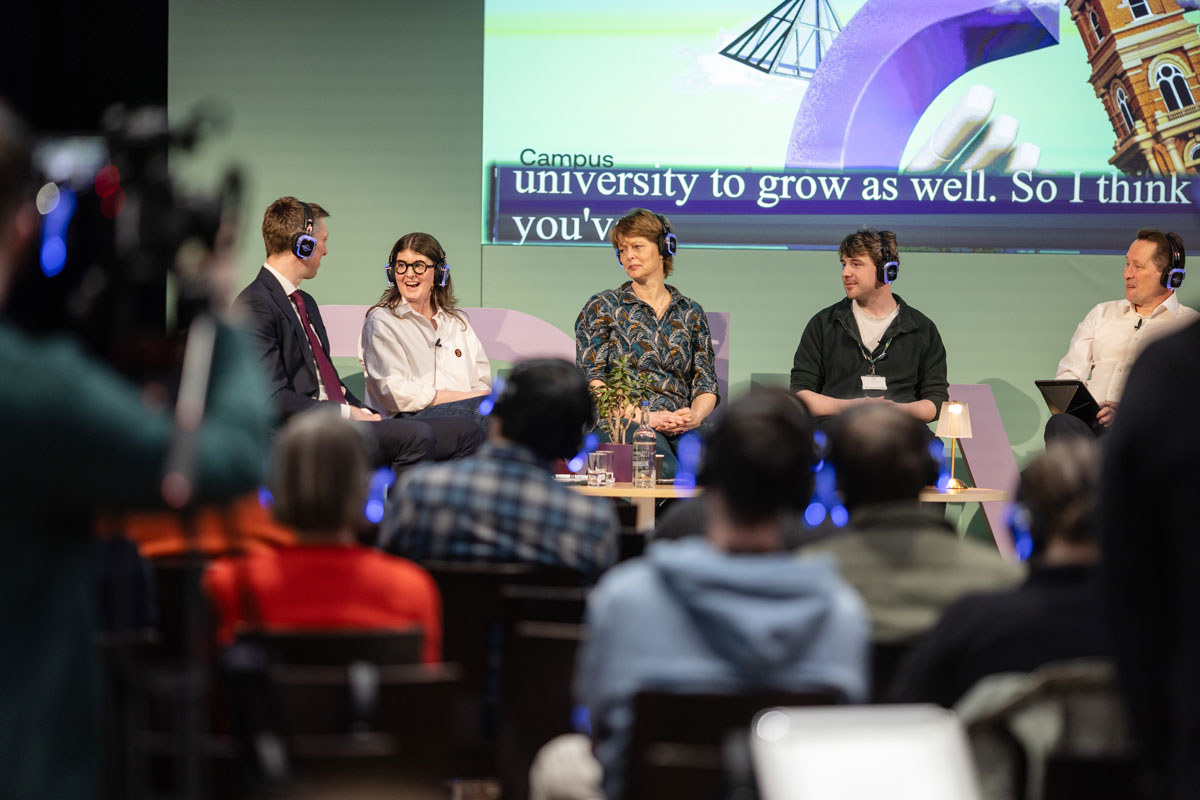
The morning’s panel explored how to create a lively, joyful campus where everyone feels they belong.
Andy Mytom, Partner at David Morley Architects, introduced the five ways we experience joy in our surroundings – nature, play, light and colour, spaces to gather, and sensory richness.
As an “architect of joy”, he reminded us that “joy is a choice we can build” but it doesn’t need to rely on permanent installations.
He said:
“The real joy of campus lives in the in‑between spaces, the routes we take, the shortcuts we return to, the way different spaces connects and creates its own sense of exploration and joy.”
The panel comprised Layla Bloom, Head of Public Programme & Cultural Engagement at University of Leeds Libraries; Pam Birtill, Academic Lead for Assessment and Feedback and Professor in the Psychology of Learning, and Chris Warrington, Director of Student Experience and Support.
Campus was framed as a powerful “container” for student life – a place where buildings, memories and everyday moments collide to shape how joy is felt. The panel stressed that joy isn’t one‑size‑fits‑all; it must be designed with diversity in mind.
Layla highlighted how the Campus Reimagined “mini projects” such as the Greenery Trail and the Active Trail, are helping to link our green spaces with our architecture to create a truly holistic campus experience. She said:
“the better we are able to connect these spaces, the better the joy on campus.”
Andy closed the discussion by reminding us that limitations, whether financial or architectural, shouldn’t be seen as barriers to joy. Instead, they should spark more inventive thinking, encouraging creative problem‑solving that will ultimately strengthen our campus experience.
Opening our doors to collaboration
In the afternoon, attention shifted to the University’s wider role within the city.
Professor Nick Plant, Pro‑Vice‑Chancellor for Innovation and Research, posed the question “How can the university campus become a seamless part of our city. A campus not just to study or work but to relax, create and innovate”.
The panel: Wieke Eringa, Director of the Cultural Institute; Celine Roblin-Robson, Public Engagement Officer and Be Curious lead; Rivea Jefferson, Engagement Coordinator (International and Postgraduate), Leeds University Union, and Michael Carey, Director of Business Engagement – quickly shifted the discussion from ideas to action. They explored how cultural openness and thoughtful physical design could remove barriers, strengthen partnerships and invite the city in.
Nick explained that 6% of space within Leeds city is public realm, and 5% of that sits within our campus. His challenge was direct: how can we transform overlooked or neglected areas into welcoming open spaces that genuinely welcome people onto campus?
Authenticity emerged as a core principle in this transformation. Whatever changes lie ahead, the campus must remain unmistakably the University of Leeds, grounded in its identity, values and sense of place.
The panellists wrapped up their conversation by defining what community could look like with Rivea stating that this would mean:
“more than opening our doors; it requires clarity about what people can experience and achieve here, and ensuring everyone who steps onto campus feels supported and included”.

Finishing on a high
With almost 2,000 staff and students joining the event across the two days, the takeaway was unmistakable: the people who use campus must be the ones shaping its future.
Insights from Campus Reimagined Live! 2026 will shape the next stage of our planning. There will be a series of roundtable discussions, open to all staff and students, in the coming months for those who couldn’t attend or would prefer to share their views in a different way.
To be involved and the first to hear more, subscribe to our newsletter and follow us on Instagram for future opportunities to contribute.
Subscribe to our newsletter
All fields marked “required” must be completed.