Campus Reimagined
Space
What if our campus was a little bit smaller – but a lot better?
What if our campus was a little bit smaller – but a lot better?
A campus can be shaped not just by its buildings, but by the activities that happen within and between them.
When learning, research, enterprise, social life and wellbeing are considered as interconnected parts of everyday experience, new possibilities emerge for how space might be clustered and shared.
Rather than organising campus by faculties or structures, what happens when we think in terms of activity and proximity, and how different uses might sit alongside one another to create more vibrant, collaborative and coherent places?
How we’re using campus
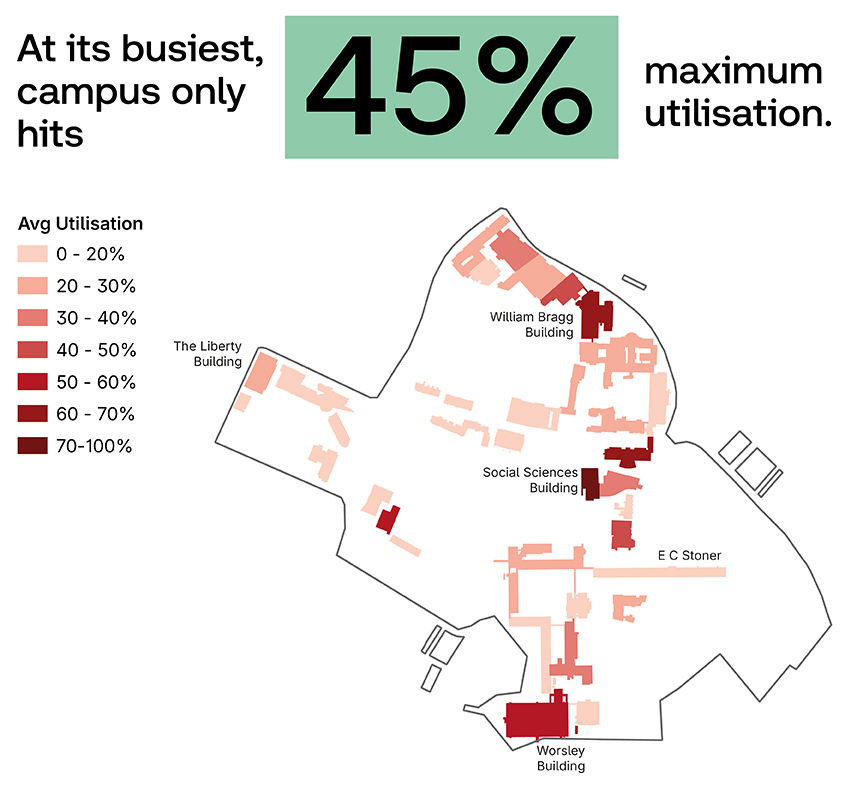
Our research showed that at its busiest, campus only hits 45% maximum utilisation.
The busiest teaching hour of the year only uses 69% of central teaching spaces.
Even when buildings are open and bustling, over half of the space is still sitting empty. We’re heating, lighting and maintaining these underused spaces, which isn’t good for the planet or our finances.
Week 9 is the busiest teaching week in the year; teaching is concentrated into a few key weeks, whilst the rest of the year space is left under-utilised and empty.
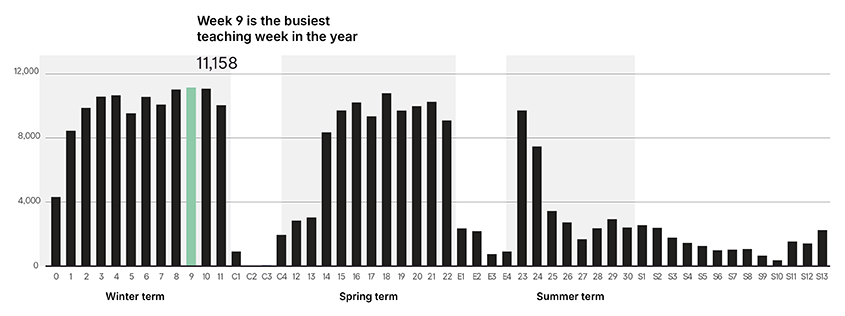
Teaching is squeezed into a few busy times. Outside those peak times, lots of rooms sit empty, which explains why campus can feel hectic at certain moments and quiet just an hour or two later.
Buildings at the far edges of campus, such as Worsley and Bragg, are among the busiest throughout the week. As a result, activity is spread across the campus rather than concentrated in one central area. How well a building is used is closely connected to its condition, the types of spaces it contains, and the student experience feedback linked to it.
34,539 students share 40 listed buildings. That’s a lot of people relying on a relatively small part of the 185 buildings on the campus estate, explaining why some places feel busy and crowded while others stay quiet, and why spreading activity more evenly could make campus feel easier and more enjoyable to use day to day.
Different types of space
As part of our research, all 295,304 sqm of useable space across the campus has been collated into ‘Campus Reimagined Space Types’ to enable understanding and analysis.
Staff offices take up 28% of all space, more than all teaching space (every lecture theatre and seminar room) combined.
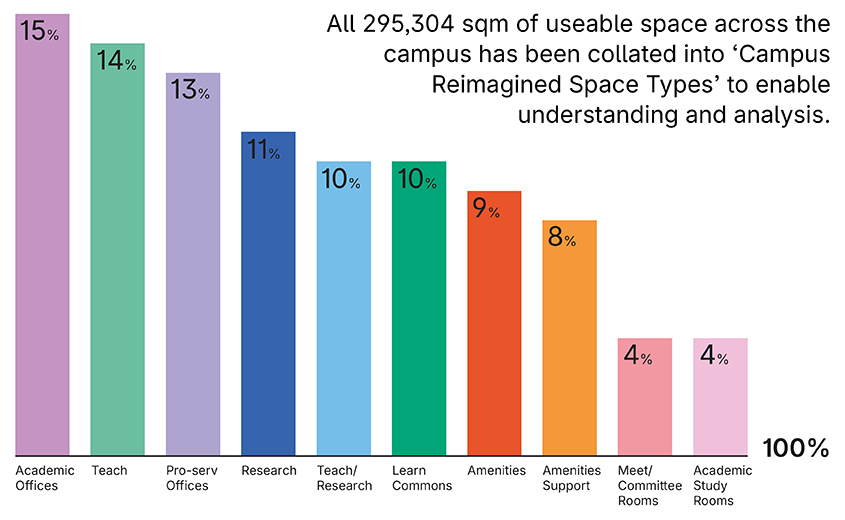
Definitions:
- Academic offices: Professors, lecturers, associate professor, teaching assistants, research assistants, post docs & post-grads
- Teach: Lecture theatres, seminar rooms, lecture rooms
- Professional offices (Pro-serv Offices): All non-academic staff and corporate services teams
- Research: Labs, workshops, technicians
- Learn commons: Libraries, drop-in computer labs, open-access study areas
- Amenities: Student services, cafes, canteens, kitchens. bars, SU, student societies, retail, theatres, sports, conferencing)
How our spaces are organised
Not all faculties and services experience campus in the same way. Some are tightly clustered, while others are split across buildings, making everyday movement and collaboration more complicated.
Some popular routes across campus take 10–15 minutes to walk. The issue isn’t just long walks, it’s that campus is laid out in a way that makes everyday journeys longer than they need to be. Often, the easiest routes across campus are not the most accessible.
From north to south, the campus changes in level by around 30 metres, roughly the height of a ten-storey building. This significant change in elevation means it can take longer to move between lectures, seminars and other activities across campus.
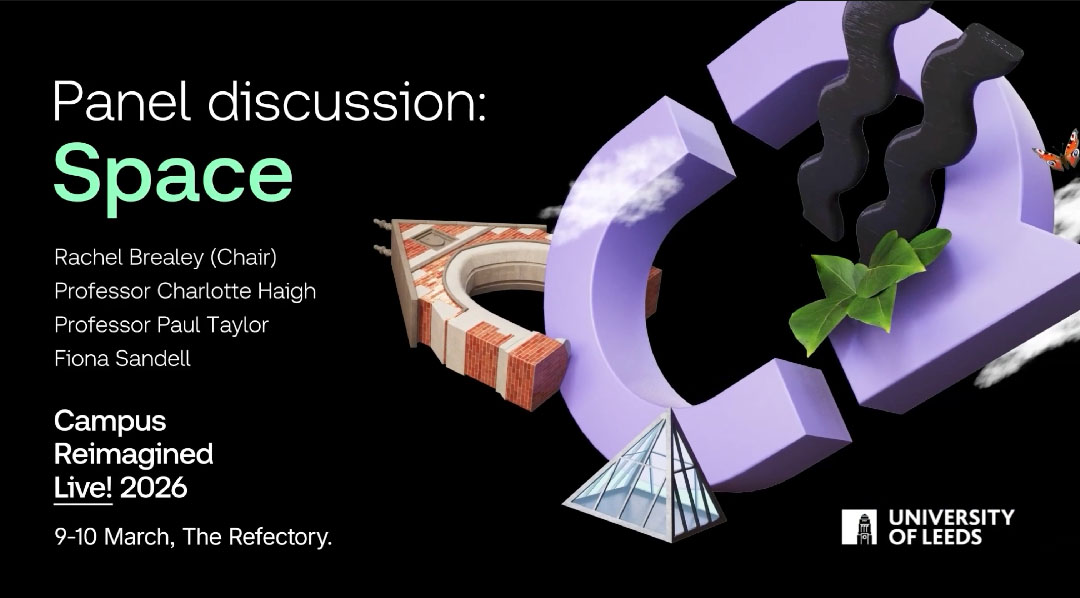
Catch up on the Space panel discussion at Campus Reimagined Live! 2026
Explore the possible through our other themes
Click the boxes to explore the themes.


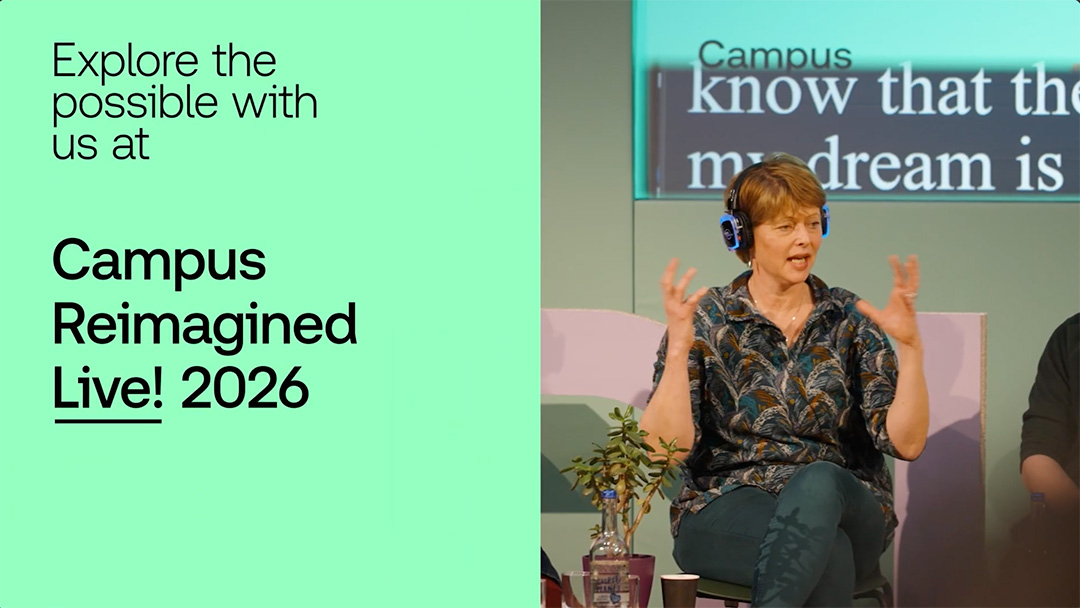
Watch a recap of Campus Reimagined Live! 2026
Campus Reimagined. All the news as it happens
To get the latest updates about Campus Reimagined, subscribe to our monthly newsletter.
Your ideas. Your campus.
All fields marked “required” must be completed.