Botanical Garden planting design revealed
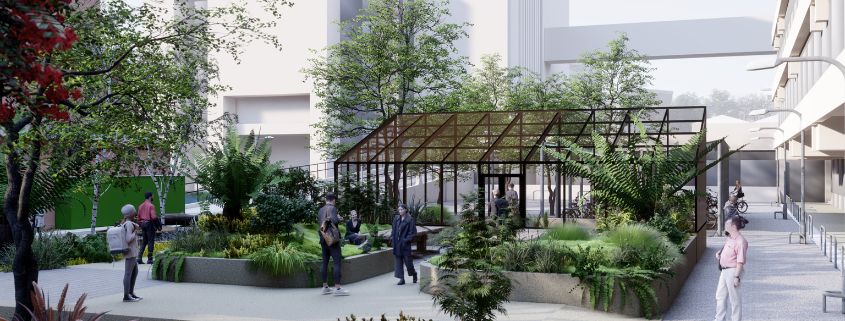
Artist's impression of Botanical Garden design, showing glasshouse, raised planting beds, accessible footpaths and seating

Following the announcement of its proposed design and location on campus, the Botanical Garden’s planting layout has now been revealed.

Over 2,000 students and staff voted to make a Botanical Garden one of the Campus Reimagined mini projects – six “quick win” initiatives to improve our campus, chosen from hundreds of ideas suggested at Campus Reimagined Live! 2025.

In its proposed location behind the EC Stoner building, the garden will revitalise the gravelled area to create vibrant greenspace for learning, research, community, and reflection.

As planning progresses, the planting and layout have been designed in collaboration with re-form landscape architecture, and draw on the ideas of over 70 students and staff who attended workshops earlier this year.

Diverse habitats and vibrant species

The proposed layout of the Botanical Garden includes four “zones”, each with a distinct design and character.
alt=""

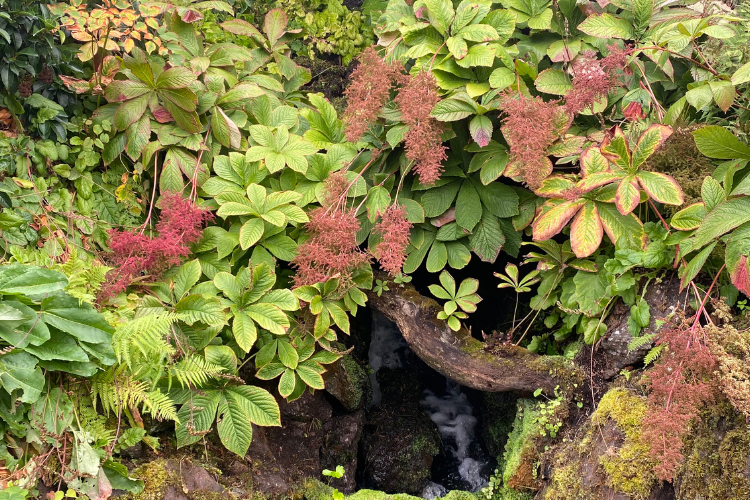
Example of hardy exotics, Royal Botanic Gardens Edinburgh

The exotic zone is vibrant and visually striking, displaying unusual and non-native species and centred around the glass house which will support more delicate and tropical plant collections, as well as providing space for teaching.

The upland meadow zone is inspired by grassland ecosystems, featuring predominantly native species of seasonal grasses and wildflowers to provide texture, movement, and habitat.
alt=""

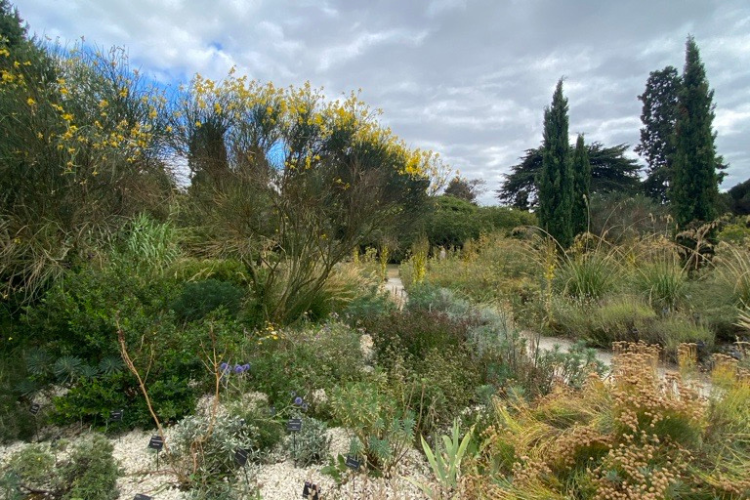
Example of a Climate Resilience garden, Cambridge University Botanic Garden

The climate resilience zone is an experimental planting area. It will showcase species adapted to changing environmental conditions, which will be monitored over time to track the performance of individual species and adapt the planting of the zone accordingly.

The fernery and mini forest zone is a shaded, tranquil woodland environment, characterised by layered planting, tree canopies, and ferns.

The planting design has been developed to work with existing site conditions, such as shade and sunlight, which will minimise disruptive and carbon-heavy works to support our sustainability goals.

A garden for everyone

As with all Campus Reimagined projects, accessible design principles are at the heart of planning.

Footpaths through the garden will accommodate two wheelchairs passing as a minimum requirement, and will be surfaced in an even, solid material to enable wheeling and walking with ease.

Seating will have armrests and backrests, and planters will be raised to ensure they are accessible.

The garden will also be complemented by the new seating area outside the Bike Hub on campus, as part of Campus Reimagined’s collaboration with the Sustainability Service and Climate Principles team to deliver another popular mini project – more seating in outdoor spaces.

Botanist and teaching fellow in the Faculty of Biological Sciences Seb Stroud, who is a member of the Botanical Garden working group, said:

“It was inspiring to meet so many enthusiastic students and staff at our interactive workshops. We explored our hopes and vision for the Botanical Garden, with a focus on creating a welcoming, inclusive and sustainable environment.

“I’m excited to see these ideas come to life in the proposed planting and garden layout. The design supports huge benefits for our campus and community, creating opportunities for innovative teaching and research, strengthening connections with our local area, and offering a peaceful space to enjoy nature throughout the year.”

What’s next?

The planning application is currently underway, with comments being accepted until 5 August. Following the outcome of the application, works will be scheduled to minimise disruption to our campus community.

We are also seeking Botanic Garden Accreditation from Botanic Gardens Conservation International – a global standard for botanic gardens, recognising key values including research capacity, conservation, and sustainability.

As well as delivering the Campus Reimagined mini projects, we will continue to provide regular updates on emerging principles for our future campus, before sharing the agreed masterplan framework later this year.  

Look out for more opportunities to get involved as the project develops. Subscribe to the newsletter to hear the latest updates and be the first to find out how you can be part of the Botanical Garden’s development.

You can also share your feedback and ask us anything at [email protected], or use the online form if you wish to be anonymous.

Subscribe to our newsletter

All fields marked “required” must be completed.

Get the latest news and occasional surveys delivered to your inbox. You may opt out at any time. View our Privacy policy.

University and national charity transform facilities for stoma users

Not all disabilities are visible sign

Stoma-friendly facilities are now available across campus, making it easier for staff, students and visitors living with a stoma to access clean and practical facilities when needed.

The improvements have been made to 89 accessible toilets across the University as part of an Estates-led project designed to enhance accessibility and inclusion across campus.

Responding to an identified need

The project was developed following feedback from the Campus Access User Group, which meets twice a year to discuss accessibility needs and identify opportunities to improve the campus experience.

Each upgraded facility now has additional features recommended by Colostomy UK, including dedicated shelves for medical supplies, clothing hooks, mirrors and disposal bins located within toilet cubicles.

The improvements help ensure people can manage their condition with greater privacy, dignity and convenience while on campus.

Making a difference to our community

The impact of the new facilities is already being felt. While on site, Matthew Booker of NRB Construction Management, who has been overseeing the upgrades on behalf of the University, was approached by Senior Dental Engineer Ben Dunwell who works in the Worsley Building.

Ben Dunwell said:

“I can’t express how amazing it is to have these stoma upgrades done. Life’s hard enough with a stoma but knowing these facilities are there for us makes getting about and living a normal life much easier.”

Working together across campus

The project was delivered in partnership with faculties and professional services teams.

Faculty staff helped identify the most appropriate locations, using their knowledge of their buildings to ensure the upgraded facilities would benefit the greatest number of people possible.

Collaborative design

The University worked closely with Colostomy UK throughout the project. The charity reviewed and approved the upgrades and has provided specialist purple signage to identify the adapted toilet entrances.

The enhanced facilities have also been added to a UK wide stoma friendly database system, helping people identify suitable facilities throughout the City of Leeds.

Visit the Estates website to find out more about other upgrade works happening across campus.

Subscribe to our newsletter

All fields marked “required” must be completed.

Get the latest news and occasional surveys delivered to your inbox. You may opt out at any time. View our Privacy policy.

What should a campus be?

Director of Campus Innovation: Masterplanning, Asset Management & Sustainability, Jen Wilson

Director of Campus Innovation: Masterplanning, Asset Management & Sustainability Jen Wilson discusses a collaborative approach to reimagining our campus.

Like many universities, Leeds has spent 50 years planning and developing our campus in largely the same way. But the sector, and our climate, is at a point where that approach no longer works.

Campus Reimagined is about giving ourselves permission to step back and ask: what should a campus be in an era of international learning and research partnerships, hybrid work and fast-paced technological advancement?

An excellent campus experience

Feedback and data shows that our campus doesn’t consistently serve the different ways we study, work and collaborate. Our spaces don’t always deliver a good experience for students, or the staff who support them.

Meanwhile, UK higher education faces unprecedented cultural, political and economic challenges, and new expectations from students.

Reimagining the campus is also driven by the need to respond to the climate and nature crises and to adapt to greater rainfall and higher temperatures in Leeds.

The way we plan, manage and use our campus needs to change to secure long-term sustainability, enable our University to meet these challenges, and ultimately deliver an excellent campus experience that enables our students to thrive here.

Your ideas, your campus

Campus Reimagined has been actively engaging with our diverse community, seeking challenge and collaboration to shape the masterplan framework. We simply can’t solve placemaking, belonging or built environment challenges on our own.

Together, we’re testing assumptions about what a “good campus experience” is – what absolutely should be on campus, what creates belonging, and how we can use space far more efficiently. This means more repurposing and adaptation, not defaulting to new build solutions.

Feedback from over 5,000 staff and students who attended Campus Reimagined Live! events in 2025 and 2026 has been brought together with ideas shared via email, activities and workshops, to help shape our masterplan framework – the principles which will guide how we plan, develop and manage campus over the next 15 years and beyond.

The University in the city

A vibrant, expanding city is a big advantage for us. New development brings vibrancy, footfall and economic activity, all of which make Leeds an attractive place for students to study and, critically, for graduates to stay. Around a third of our graduates remain in Leeds, so seeing more companies move here from London, and choose Leeds over other regional cities, is fantastic.

Leeds City Council are hugely collaborative and future-focused, and the conversations we have with them are essential for shaping how the city evolves and how we integrate with it.

There are also challenges. Much of the growth is concentrated on the South Bank and Wellington Place, which is physically quite a distance from our University. It raises questions about connectivity and whether we should work harder to bring activity onto campus or be more deliberate about how our estate links with those emerging areas.

The University works with a huge range of city partners – in arts and culture, financial services firms, and more, whether through research, teaching or other collaborations. These relationships also raise practical considerations: do we have the right types of collaboration space on campus? Should students go to businesses rather than the other way around?

Our masterplan framework will draw on feedback from students, staff and the wider community, as well as research conducted by our expert masterplanners, to consider how our campus could respond to these questions.

What’s next?

We’ll continue to provide regular updates on emerging principles for our future campus, before sharing the agreed masterplan framework later this year.

Planning and development will continue to be shaped by our community. You can share your thoughts and ask us anything at [email protected], or use the online form if you wish to be anonymous.

Personally, I’m particularly excited about emerging opportunities to showcase outstanding work on campus.

So much brilliant activity happens on campus but is tucked away. I want us to bring that activity to the public-facing and ground floors of campus where it’s visible, inviting and clearly part of the city.

You can’t just build a space and assume it will thrive, but with time and the right approach, I see a future where our cultural, academic and innovation strengths are on display, part of the fabric of Leeds.

Subscribe to our newsletter

All fields marked “required” must be completed.
Get the latest news and occasional surveys delivered to your inbox. You may opt out at any time. View our Privacy policy.

Feedback shapes future of campus

alt=""

Earlier this year, 2,000 staff and students took part in Campus Reimagined Live! 2026 to explore what the future of our campus could look like and share feedback on these possibilities.

Their ideas have been brought together with suggestions from 3,000 attendees at last year’s Campus Reimagined Live! event, as well as feedback received via email, activities and workshops, to help define our masterplan framework – the principles which will guide how we plan, develop and manage campus over the next 15 years and beyond.

Find out what we heard at the event and discover how our community’s voices are shaping the future.

A joyful campus

At Campus Reimagined Live! 2026, every visitor was invited to vote on which event theme mattered most to them: space, joy, community or future. Joy was the most popular theme by a clear margin, chosen by 42% of staff and students.

Wider discussions and feedback across the event echoed the poll results. Participants wanted campus to feel less transactional and rushed, and more social, playful and human. Staff particularly connected joy to collegiality, wellbeing and a more vibrant working environment.

Overall, experience emerged as the primary driver of ideas and hopes for the future of campus. This reaffirms our commitment to creating a joyful, collaborative and engaging environment, with campus experience at the heart of our long-term planning.

The value of green spaces

“We need more green in campus. Green = wellbeing” – attendee, Campus Reimagined Live! 2026

The importance of green spaces, nature and wildlife was one of the strongest areas of consensus across all feedback. Staff and students described green spaces not only as environmental infrastructure, but as essential to their wellbeing and sense of belonging. 

When asked what campus will be like in ten years, 13% of 380 responses mentioned more green space and nature – the most prevalent theme.   

In addition, we received hundreds of suggestions for more and different types of seating, particularly outdoors. 

We are considering how principles for the future development of campus can reflect the value our community places on spending time in nature. For example, rationalising vehicle movement on campus could create opportunities to transform streets into greener, people-focused spaces with more seating.

Identities and silos

One of the possibilities we explored at Campus Reimagined Live! 2026 was “Campus Quarters”, with participants invited to divide campus into four named zones to strengthen identity.

However, staff and students raised concerns about how this approach could deepen silos. We are now considering a simpler structure, characterising key areas to improve wayfinding while enhancing connection across campus.

Clarity and accessibility

“We love campus, but it needs better signage” – attendee, Campus Reimagined Live! 2026

Staff and students told us that a new approach to wayfinding is essential to make campus easier to navigate, more cohesive, and genuinely open.

Discussions also highlighted the need for a clear, direct and step-free pedestrian route connecting the north and south of main campus which could address both wayfinding and accessibility, as well as strengthening the social heart of campus.

Reflecting this feedback, we are adjusting the priority levels of potential developments in signage, wayfinding and campus-wide routes.

Untapped potential

There were mixed views on our large campus buildings. While noting poor user experiences and an unwelcoming environment, many staff and students saw huge potential through redesign, repurpose and improving access.

With this in mind, we are prioritising retrofit and renewal of existing buildings. As well as transforming the least effective spaces, this approach will reduce environmental impact.

What’s next?

We will continue to provide regular updates on emerging principles for our future campus.

Subscribe to the Campus Reimagined newsletter to be the first to hear the latest news and find out about opportunities to get involved.

Planning and development will continue to be shaped by our community. Share your thoughts and ask us anything at [email protected], or use the online form if you would prefer to be anonymous.

Subscribe to our newsletter

All fields marked “required” must be completed.

Get the latest news and occasional surveys delivered to your inbox. You may opt out at any time. View our Privacy policy.

First mini project launches

Photograph of Ann Allen and Hazel Mooney before cutting the ribbon on the Campus Greenery Trail

Over 40 staff and students took part in a Wildlife Wander on 13 May to celebrate the launch of the Campus Greenery Trail – one of our community’s favourite Campus Reimagined mini projects, and the first of these to be completed.

The trail enables our community to enjoy green spaces in new and inclusive ways, with maps, a biodiversity spotlight board, waymarkers and even indoor installations across campus.

Boosting wellbeing and biodiversity

University leaders Rachel Brealey, Chief Operating Officer; Professor Nick Plant, Pro-Vice-Chancellor for Research and Innovation; and Ann Allen, Director of Campus Innovation and Development cut the ribbon on each of the maps to officially open the mini project, and invited staff and students to be the first to explore the trail.

Project lead Dr Hazel Mooney, from the School of Earth and Environment, guided the group on a Wildlife Wander – a special edition of the Sustainability Service’s regular events.

The route showcased the different ways the Greenery Trail encourages people to engage with our campus:

  • Taking notice of the nature around us, from urban trees and different species of wildlife to new perspectives on much-loved green spaces – including from indoors. The group discovered pollinator poles and window art across campus, scanning the QR codes to learn more about the nature nearby.
  • Getting involved and supporting wildlife on campus. Sustainability Service volunteers demonstrated how staff and students can take part in biodiversity monitoring and contribute their findings to the University’s iNaturalist page.
  • Resting and reflecting in green spaces. Hazel explained how spending even a few moments in nature can boost our wellbeing. The Campus Greenery Trail map signposts places to pause and take a break from the rush of university life.

Your ideas, your campus

Ann said:

“I’m delighted to see this Campus Reimagined project come to life, voted for and shaped by our community.

“Hazel has led the project with great vision and passion, bringing colleagues together from across the University to turn a shared idea into positive impact on campus.

“The Campus Greenery Trail will help us to connect with nature, supporting wellbeing and biodiversity, and enhancing the campus experience for students, staff and visitors alike.”

Explore the Campus Greenery Trail webpage and scan the QR codes across campus to find out more about the nature nearby.

Subscribe to our newsletter

All fields marked “required” must be completed.
Get the latest news and occasional surveys delivered to your inbox. You may opt out at any time. View our Privacy policy.

Campus Greenery Trail comes to life

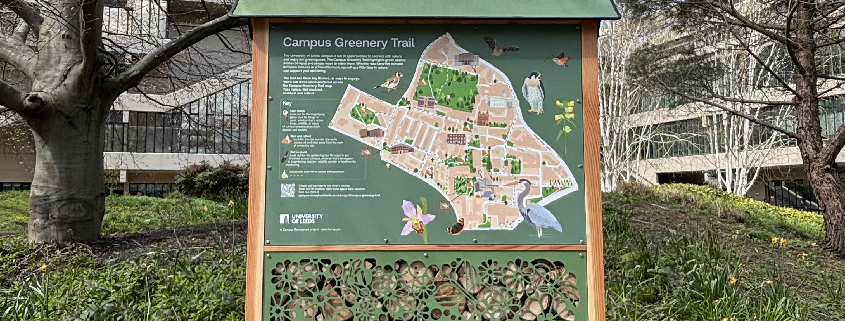
Photograph of Campus Greenery Trail map in Chancellor's Court, with illustrated map of University of Leeds campus highlighting places to enjoy nature

The first Campus Reimagined mini project is complete, with staff and students invited to be the first to explore the Greenery Trail.

You may have spotted some exciting signs installed across campus over the last few weeks.

These maps, information boards and waymarkers are all part of the Campus Greenery Trail – one of our community’s favourite Campus Reimagined mini projects, voted for by almost 2,000 staff and students.

Join us at 12-1.15pm on 13 May for a Wildlife Wander to celebrate the official launch of the trail, find out how your ideas have been brought to life, and enjoy free hot drinks and cake as we learn why spending time in green space boosts wellbeing.

Due to exceptional demand, tickets are now available for an additional Wildlife Wander to celebrate the launch of the Campus Greenery Trail, 4-5.15pm on 13 May.

Connecting with nature

The Campus Greenery Trail enables our community to enjoy green spaces on campus in new and inclusive ways – whether that’s getting involved with biodiversity monitoring, spotting different species of trees and wildlife, or simply taking a moment to rest and reflect in nature.

Illustrated maps in Chancellor’s Court and near Esther Simpson provide an overview of the trail, including an accessible route and a key to help you find what you’re most interested in.

Staff, students and visitors will be able to scan the QR code on any of the waymarkers across campus to find the Greenery Trail webpage, use the interactive map and see what’s nearby.

There are even indoor installations to help bring the outside in. You’ll spot these on the windows in Red Route, overlooking Chancellor’s Court; in Mechanical Engineering, looking onto St George’s Field; and in EC Stoner, framing the dawn redwoods – a species of tree that, less than 100 years ago, was thought to be extinct.

Rather than prescribing a single route, the Campus Greenery Trail highlights different opportunities to engage with nature – whether you have five minutes between meetings to notice the wildlife nearby, or a longer break to explore a green space you didn’t know existed.

alt=""

Supporting biodiversity

The trail installations have been innovatively designed to support wildlife on campus.

The waymarkers double up as pollinator poles, to help our campus bee community, and the signs also act as bird nesting boxes.

The Biodiversity Spotlight board, located at the back of the Students’ Union, showcases some of the species you might spot around campus and includes detailed illustrations to aid identification.

Explore the trail

Join us at a special edition of the Sustainability Service’s monthly Wildlife Wander, taking place at 12-1.15pm and 4-5.15pm on 13 May, to unveil the completed trail and be the first to explore!

We’ll take a gentle 40-minute wander with project lead and tree expert, Hazel Mooney from the School of Earth and Environment and discover how the trail enables us to enjoy our campus green spaces in new ways.

Along the way, the University’s Sustainability Programme Officer for biodiversity, Mike Howroyd, will explain how to identify key wildlife species and record your findings to support our thriving habitats on campus.

We’ll pause at the Sensory Garden to learn why spending time in nature can enhance our wellbeing, with hot drinks and cake to finish.

You can also find out about other ways get involved with Sustainability at the University, including our first ever City Campus Bioblitz on 24 April.

Hazel said:

“We’re really fortunate to have great biodiversity and amazing green spaces on our campus. The Greenery Trail, voted for by staff and students, is all about raising awareness of these spaces and enabling everyone to make the most of the nature around us.

“I’m excited to see our community checking out the maps and following the waymarkers, and I hope the trail helps people to engage with campus greenery in the way that brings them the most joy!”

Subscribe to our newsletter

All fields marked “required” must be completed.

Get the latest news and occasional surveys delivered to your inbox. You may opt out at any time. View our Privacy policy.

First look: Botanical Garden design

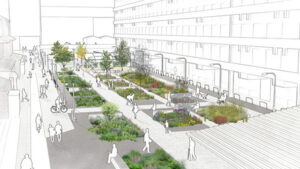
Botanical Garden CGI


The final design of a Botanical Garden on campus has been proposed, with staff and students invited to shape the next stage of development.

Over 2,000 students and staff voted to make a Botanical Garden one of the six Campus Reimagined mini projects – ‘quick win’ initiatives to improve our campus, chosen from hundreds of ideas suggested at Campus Reimagined Live! 2025.

Since then, a team led by Seb Stroud, botanist and teaching fellow in the Faculty of Biological Sciences, have brought our community’s ideas to life with a plan for a Botanical Garden on campus.

Teaching, learning and wellness

In its proposed location behind the EC Stoner building, the garden will revitalise the gravelled area to create vibrant greenspace for learning, research, community, and reflection.

The design was produced in collaboration with Re-form landscape architecture and shared with the University community for the first time at Campus Reimagined Live! 2026 on 9 and 10 March. It includes raised beds featuring native habitats and plants of Yorkshire, exotic plants of cultural and historic significance, and a glasshouse.

The Botanical Garden will facilitate a wide range of activities and benefits – from innovative and interdisciplinary teaching and learning, to wellbeing initiatives and community engagement.

Get involved

All staff and students are invited to attend one of seven workshops, taking place between 18 March and 20 May, to contribute to the next stage of planning and explore how the garden can enhance their experience on campus.

Seb said:

“According to the Botanic Gardens Conservation International, there hadn’t been a new botanic garden at an English university for 100 years – until you voted to make it happen.

“The enthusiasm of the students and staff who supported this project shows how much we value greenspace and nature on campus.

“I’m excited to invite all students and staff to get involved with the upcoming workshops. Join us to share your ideas and hopes for the Botanical Garden, and ensure the space continues to develop in ways that reflect the needs and aspirations of our community.”

Workshops will take place on the following dates:

You can also use the staff or student registration form to express your interest in an online session, with dates to be confirmed shortly.

Following the workshops, we will develop our Botanical Garden mission, vision, and long-term plan, with various opportunities for volunteering during the creation of the garden.

Subscribe to the newsletter to be the first to hear the latest updates on the Botanical Garden and all the mini projects.

Subscribe to our newsletter

All fields marked “required” must be completed.
Get the latest news and occasional surveys delivered to your inbox. You may opt out at any time. View our Privacy policy.

Meet the speakers | Campus Reimagined Live! 2026

Text 'Campus Reimagined Live! 2026' on black background with photographs of Professor Nick Plant, Pro-Vice-Chancellor: Research and Innovation at University of Leeds; and Rachel Brealey, Chief Operating Officer at University of Leeds

The full line-up of expert speakers is here!

Get ready for Campus Reimagined Live! 2026 – two days of inspiring panel discussions and interactive exhibitions for all colleagues and students, taking place on 9 and 10 March at the Refectory.

Book your place at the panel discussions and drop into the exhibition to help shape the future of our campus.

What if our campus was a little bit smaller – but a lot better?

Chief Operating Officer (COO), Rachel Brealey will lead the discussion on Space, 11am-12pm on 9 March. As COO of the University, Rachel manages and leads strategic change, and ensures the efficient use of our resources and the quality of service provision.

Joining Rachel are:

  • Associate Pro-Vice-Chancellor for Enhancement and Student Experience, Professor Charlotte Haigh
  • Director at Evolve Programme and Project Management, Fiona Sandell
  • Head of the Pedagogy & Scholarship of Chemistry, Professor Paul Taylor

You’ll hear about the findings of a recent survey of spaces across main campus, investigating where our environment supports our ambitions – and where it might be holding us back.

The panel will explore how we could meet these challenges and think differently about how we use our space to create a more efficient and effective campus, with time for questions and ideas.

Find out more about our Space panellists and book your place.

What if our campus enabled better connection with the city?

The Community panel, 12.30-1.30pm on 10 March, will be opened by Professor Nick Plant, Pro-Vice-Chancellor: Research and Innovation. Nick leads on the development of the University’s research and innovation strategy, which includes promoting partnerships in key sectors and delivering impact for the region and beyond.

Nick will be joined by:

  • Director of the Cultural Institute, Wieke Eringa
  • Public Engagement Officer and Be Curious lead, Celine Roblin-Robson
  • Engagement Coordinator (International and Postgraduate), Leeds University Union, Rivea Jefferson
  • Director of Business Engagement, Michael Carey

The panel will discuss how we could develop a campus that breaks down barriers and opens doors to opportunities in research, business and community engagement.

We’ll explore ideas for new gateways and reimagined spaces that could enable us to interact with our neighbours and visitors in ways that benefit everyone.

The panel will be followed by an open question and answer session, giving you the chance to find out more and share your perspective.

Find out more about our Community panellists and book your place.

Explore the possible

Book your place at all the talks and panel discussions to gain insights from University leaders and join the discussion.

Subscribe to our newsletter to hear the latest updates.

Subscribe to our newsletter

All fields marked “required” must be completed.

Get the latest news and occasional surveys delivered to your inbox. You may opt out at any time. View our Privacy policy.

Inspiring panellists announced | Campus Reimagined Live! 2026

Campus Reimagined graphic

Experts in design, culture and innovation will share insights on the themes of ‘Joy’ and ‘Future’ at Campus Reimagined Live! 2026.

Book your place at the panel discussions and drop into the interactive exhibition, 9 and 10 March at the Refectory, to be part of the conversation about the development of our campus.

What if…our campus was designed to evolve with us?

The Future panel, 12.45-1.45pm on 9 March, will be led by Director of Masterplanning at Prior + Partners, Elise Baudon – an expert in designing innovative and future-focused environments.

Elise will be joined by specialists from across the University of Leeds:

  • Founding Director of the Priestley Centre for Climate Future, Professor Piers Forster CBE
  • Chief Digital & Information Officer, Masud Khokhar
  • Director of Strategic Planning and Performance, Aashish Khadia

The panel will discuss our role as ‘campus custodians’, shaping an environment that allows us to be flexible, sustainable, and ready for new opportunities.

You’ll gain insights into the long-term choices we could make to ensure our campus and community thrive, with time for questions and ideas too.

Masud said:

“I’m looking forward to being part of this panel and discussing the exciting possibilities that the future could hold for our campus. I’m particularly interested in how we can plan our environment to evolve with our community, including new ways of learning, researching and working together enabled through digital innovation.”

Find out more about our Future panellists and book your place.

What if…our campus was designed to spark joy?

The Joy panel, 11am-12pm on 10 March, will be opened by Andy Mytom, Partner at David Morley Architects. Andy specialises in creating environments that enable healthier, happier experiences. He’ll be joined by University experts:

  • Head of Public Programme & Cultural Engagement at University of Leeds Libraries, Layla Bloom
  • Academic Lead for Assessment and Feedback and Professor in the Psychology of Learning, Pam Birtill
  • Director of Student Experience and Support, Chris Warrington

Join the panel to build a picture of a lively, joyful campus where everyone feels they can belong.

You’ll find out about the ‘architecture of joy’; the power of art and culture; and the potential of our environment to support the wellbeing of colleagues and students.

The discussion will be followed by open question and answer session, giving you the chance to find out more and share your perspective.

Find out more about our Joy panellists and book your place.

Explore the possible

Be the first to book your place at more panel discussions, with speakers to be announced shortly:

Subscribe to our newsletter to hear the latest updates.

Plus, look out for Parkinson Tower, Nexus and MSCP glowing purple and green from 8-10 March to celebrate Campus Reimagined Live! 2026.

Subscribe to our newsletter

All fields marked “required” must be completed.

Get the latest news and occasional surveys delivered to your inbox. You may opt out at any time. View our Privacy policy.

Professor Shearer West to open Campus Reimagined Live! 2026

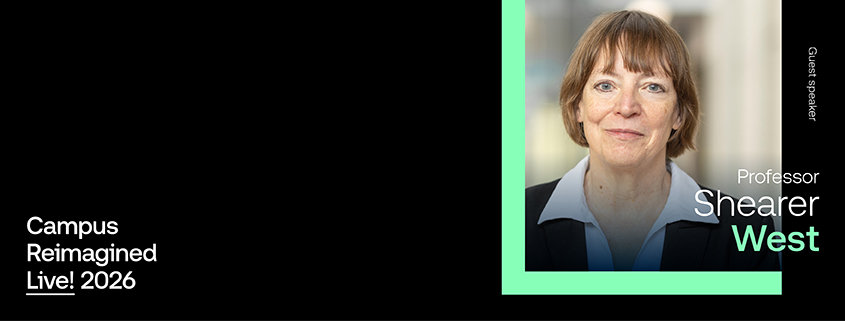
Photograph of Professor Shearer West with text 'Guest speaker, Campus Reimagined Live! 2026'

Vice-Chancellor and President Professor Shearer West has been announced as the first speaker at Campus Reimagined Live! 2026, opening the event at 10-10.30am on Monday 9 March at the Refectory.

In her presentation ‘Explore the possible’, Shearer will discuss the global, national and sector-wide context for Campus Reimagined – our plan for the management and development of a sustainable, welcoming and inclusive campus.

At a pivotal moment for our University, Shearer will explain the central role of our physical estate in the University’s success and the opportunities ahead to ensure a better campus experience for everyone.

Shearer said:

“I am looking forward to welcoming students and staff from across the University to Campus Reimagined Live! 2026.

“I attended the last event in February 2025, and I was impressed by the energy, enthusiasm and ideas shared by our whole campus community.

“This year, you will find out how your ideas have been brought together with data to build a picture of what the future of campus could look like.

“Please join us, share your feedback and be part of this vital conversation about our campus.”

Book your place at Shearer’s talk and drop into the interactive exhibition, running from 10am to 4pm on the 9 and 10 March at the Refectory.

More information about our inspiring line-up of speakers is coming soon. Subscribe to our newsletter and be the first to book your place.

Join us to explore the possible.

Subscribe to our newsletter

All fields marked “required” must be completed.
Get the latest news and occasional surveys delivered to your inbox. You may opt out at any time. View our Privacy policy.

University of Leeds logo
Privacy Overview

This website uses cookies so that we can provide you with the best user experience possible. Cookie information is stored in your browser and performs functions such as recognising you when you return to our website and helping our team to understand which sections of the website you find most interesting and useful.